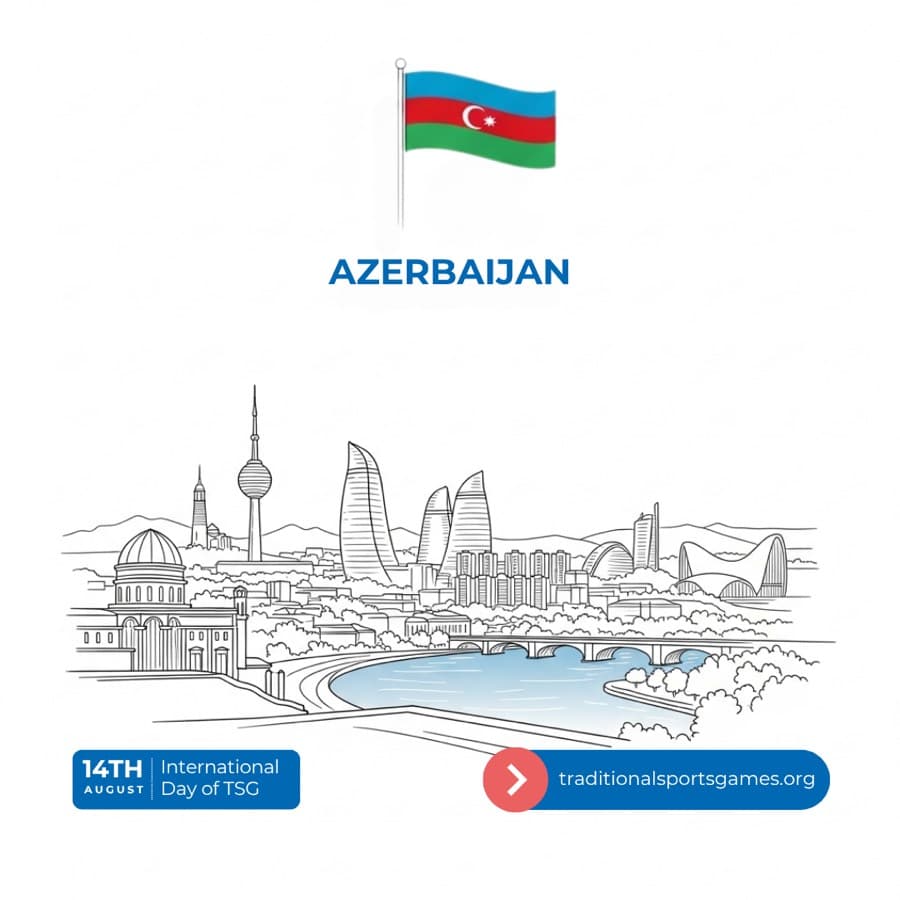
Positions Open with Azerbaijan Chapter 1. Chapter President for AzerbaijanApply Now 2. General Secretary for AzerbaijanApply Now 3. Information & Communications Lead for AzerbaijanApply Now Pre‑Qualification Checklist Benefits & Perks Responsibilities
Information drawn from the 4th UNESCO‑facilitated Collective Consultation on TSG, held 13–14 August 2018 at Sheraton Grand Istanbul Atasehir in Istanbul, Turkey, hosted by the UNESCO Ad-hoc Advisory Committee and supported by WEC and the Turkish Ministry of Sports. ⬥ Refer to the ICTSG history overview here. Azerbaijan at the 4th UNESCO Collective Consultation on TSG (13‑14 Aug 2018) Participants & Official Signatory Representative: Mr. Farid Mansurov, Head of International Affairs, Ministry of Sports of the Republic of Azerbaijan. Official Signatory: Mr. Farid Mansurov, acting in his capacity as Head of International Affairs of the Ministry of Sports, endorsed the Azerbaijan Chapter’s internal commitment to ICTSG on 14 August 2018 in Istanbul. Meeting Context Azerbaijan joined over 40 UNESCO Member States at the Sheraton Grand Istanbul Atasehir to refine a global action plan for safeguarding traditional sports and games. Azerbaijan’s delegation reaffirmed its dedication to preserving indigenous sports and cultural heritage. Overview of Azerbaijan Azerbaijan, at the crossroads of Eastern Europe and Western Asia, blends ancient traditions with modern perspectives. Known for its vivid cultural mosaic, the nation is rich in heritage and biodiversity, hosting the Caspian Sea and the Caucasus Mountains. Azerbaijan’s strategic location has fostered dynamic cultural exchange—and its traditional sports reflect this vibrant convergence. Geographic Importance Spanning the Caspian coastline to highland mountain ranges, Azerbaijan offers terrains for varied sports and games. Highland plateaus support equestrian traditions like Chovgan, while coastal plains facilitate martial and water‑based activities. This geographic diversity underpins the nation's unique position in preserving century‑old sporting traditions. Traditional Sports of Azerbaijan Azerbaijan’s rich sporting legacy includes:
Chovgan: A centuries‑old equestrian game similar to polo, played on Karabakh horses. Dating from the 1st millennium, UNESCO listed it as “Urgent Safeguarding” in 2013 Pehlevanliq wrestling: A blend of physical strength, cultural ritual, and martial arts, practiced in traditional zorkhanas with medieval weapon-style routines Ashirma wrestling: A local classical wrestling style tracing back to Safavid times, rooted in folk combat traditions
Role in ICTSG Formation Azerbaijan’s interventions in Istanbul helped shape the ICTSG’s structure—proposing UNESCO heritage alignment, heritage festival exchanges, and ongoing chapter-based preservation efforts. Their contributions clarified the role of indigenous sports in national identity and international cultural policy. Weather & Climate Conditions Azerbaijan’s varied climate—from sub‑tropical in the Lankaran region to continental in the interior—supports an array of outdoor traditional sports. Winters at higher elevations enable seasonal martial training, while milder valleys allow year‑round equestrian games. This climatic spectrum sustains traditional play settings adapted to geographic climates, linking natural environment with cultural practices. UN SDG Alignment Azerbaijan’s TSG preservation efforts align with key UN Sustainable Development Goals, including:
**SDG 3 (Good Health & Well‑Being):** Traditional sports enhance community health and active lifestyles (sdgs.un.org/goals/goal3). **SDG 4 (Quality Education):** Integrating heritage in education promotes lifelong learning and cultural transmission (sdgs.un.org/goals/goal4). **SDG 11 (Sustainable Cities & Communities):** Safeguarding intangible heritage enriches community identity and citizenship (sdgs.un.org/goals/goal11).
Historical Relevance From chovgan’s 11th‑century archaeological traces to zorkhana routines rooted in medieval rituals, Azerbaijan’s traditional sports embody centuries of communal and martial tradition This historical resonance affirms Azerbaijan’s rightful place in safeguarding these practices through formal institutions like ICTSG. Traditional & Indigenous Games Section Chovgan: An ancient equestrian ball sport played by two teams on Karabakh horses. With roots stretching back to the 1st millennium and cited in classical literature like Nizami’s Khosrow and Shirin, it’s internationally recognized by UNESCO :contentReference[oaicite:8]{index=8}. Pehlevanliq Wrestling: A ceremonial strength-based martial form practiced in traditional zorkhanas with musical accompaniment, rope, sword-related tools, blending physicality with cultural ritual Ashirma Wrestling: Traditional form of wrestling with origins in Safavid Azerbaijan, emphasizing throws and topple techniques, historically used to train warriors and preserve martial culture
Get Involved Benefits of Joining Support ICTSG About ICTSG: The International Council of Traditional Sports and Games (ICTSG) is dedicated to preserving, promoting, and revitalizing traditional sports and games as powerful tools for education, peace, and sustainable development.
About Us History
When a sport disappears, it is like a language no longer spoken - its stories, values, and lessons risk being lost forever. When we revive a game, we revive a culture.
Khalil Ahmed Khan - President, ICTSG